Embrapa and four Chinese institutions signed a Memorandum of Understanding (MoU) to expand scientific and technological cooperation between the two countries, focusing on the development and application of artificial intelligence (AI) for family farming. The agreement was signed during a mission to China in September. It provides for the establishment of the Brazil-China Cooperation Center for AI Application, as well as for joint research, the exchange of researchers and technicians, capacity-building, and the setup of pilot centers on smart agricultural machinery in Brazil.
The MoU signed by Embrapa, Nanjing Agricultural University (NAU), Jiangsu Academy of Agricultural Sciences (JAAS), Sinomach Digital Technology Corporation, and the International Association for People’s Cooperation (IAPC) establishes a framework to organize projects of common interest and bring the scientific, technological, and institutional expertise of the two countries closer. It is valid for five years.
For the president of Embrapa, Silvia Massruhá, the partnership responds to a strategic challenge for Brazilian agriculture: “If we don’t digitally include smallholders and mid-scale farmers in family agriculture, the gap between them and large-scale farmers will grow”, she explains.
Technology with adaptations to Brazilian conditions
The partnership stems from the understanding that digital technologies need to be adapted to different agricultural realities. The goal is not only to transfer solutions from one country to another, but to establish a process in which knowledge and technologies are assessed, adapted, and validated according to the conditions in each production system.
“More than just technology transfer, the agreement is about co-development, about adapting solutions to our reality”, Silvia Massruhá explains. The president stresses that such adaptation is particularly important in Brazil, which combines different production systems and six biomes.
The Memorandum comprises that very own diversity. The technologies can be applied to several agricultural chains and crops, including fruit, vegetables, corn, soybeans, rice, and other family farming activities. The solutions include smart agricultural machines, digital platforms, the Internet of Things (IoT), big data, artificial intelligence, socialized agricultural services, and crop models, as well as equipment and devices aimed at small and medium-sized properties.
Pilot centers and scientific exchange
One of the main fronts the agreement stipulates is the joint establishment of Smart Agricultural Machinery Service Centers in family farming settlements in Brazil. The pilot areas will allow for the demonstration of smart machines and platforms and for technology assessment under real production conditions. Sensors, IoT devices, big data, and artificial intelligence can be combined and used in those locations for monitoring, analysis, and decision-making support.
Integrating demonstration units into the National Program for Technical Assistance and Rural Extension (PNater) is also being considered, as well as the possibility of replicating the experiences in other settlements.
The agreement also provides for the exchange of researchers, technicians and graduate students, technical missions, workshops, seminars, training courses, and remote collaboration between the institutions. The cooperative unions involved in the pilot areas will also participate in the collection and management of data the activities generate
Chinese experience in digital agriculture and smart mechanization will be one of the bases to assess technologies that can be applied to Brazilian pilot projects. Sinomach Digital Technology Corporation is part of the digital technology front. Embrapa’s mission to China visited initiatives using robotics, automation, and artificial intelligence in agricultural production.
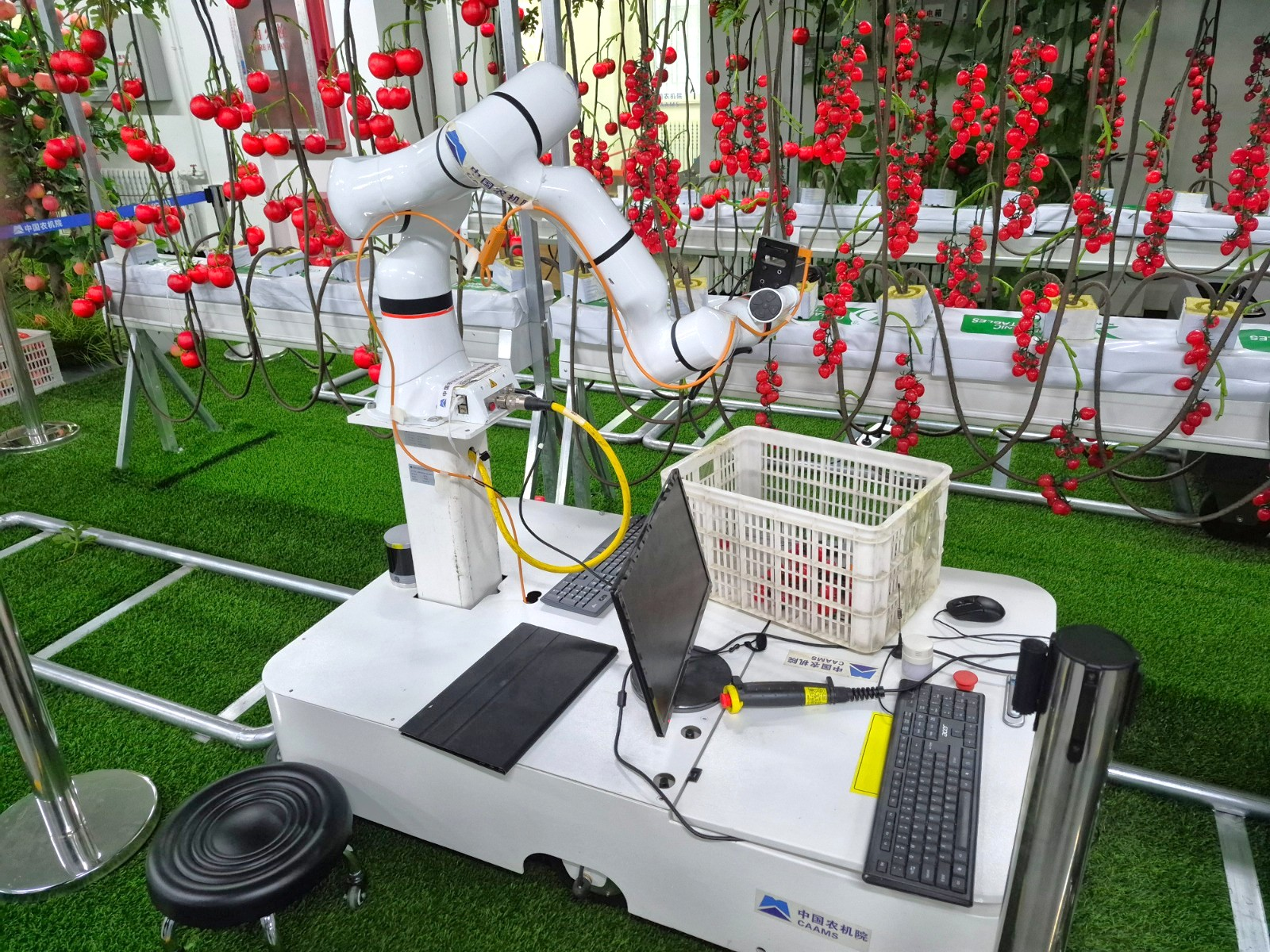
For instance, the Brazilian delegation learned about robotic arms used not only to harvest strawberries, tomatoes, grapes, and other fruits, but also to monitor systems that integrate different sensors and allow for real-time tracking of field information.
“The closer ties with Sinomach pave the way to bring those innovations to Brazil and adapt them to our reality”, explains Luciana Alvim Santos Romani, a researcher at Embrapa Digital Agriculture. Alongside Silvia Massruhá, she is one of the coordinators of Semear Digital, a project that aims to broaden smallholder and mid-scale farmer access to new technologies.
According to the researcher, the proposal is to “tropicalize” those solutions, combining them with knowledge already being generated in Brazil and adapting equipment and technologies to Brazilian conditions.
As an example, she mentions robots to monitor plants, count fruits, and estimate yield; or smaller tractors that are considered potentially suited for Brazilian smallholdings and medium-sized farms.