by Carlos Eduardo Pacheco Lima*
While Brazilian agriculture has been historically built on scientific foundations and recognized for its productive efficiency, it is currently at a decisive moment. The combination of political and economic instability, geopolitical tensions, intensification of extreme weather events, and growing pressure for productivity poses a central challenge for the sector: to produce more, with less impact, increased resilience, and social inclusion.
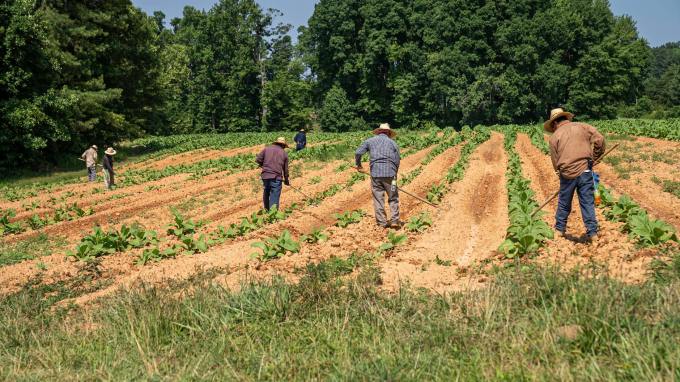
In this context, a key point that is often overlooked in decision-making forums is the role of small- and mid-scale agriculture, including family farming. These are systems that, despite accounting for a significant portion of the country’s food supply, end up overlooked in structural strategies for innovation, funding, and public policy.
Ensuring employment, income, and decent living conditions in rural areas is not just a social agenda—it is an essential condition for food and nutritional security in Brazil. To this end, it is urgent to increase the resilience and sustainability of production systems, especially those that are most vulnerable to climate change and market fluctuations.
In recognition of such challenge, one of Embrapa’s strategic innovation fronts is the development and intensification of integrated unconventional production systems to be applicable across all Brazilian biomes. The proposal goes beyond the already established model of Integrated Crop-Livestock-Forestry Systems (ICLFS) and aims to effectively include small- and mid-scale agriculture.
The aim is to promote integrated systems that can diversify production, reduce environmental impacts, optimize the use of resources, generate income, and improve working conditions, while respecting regional specificities. Examples include agroforestry systems, integrating vegetables with fruit trees, no-till vegetable farming, integrating aquaculture with agriculture, aquaponics, small animal systems, integrating food and energy production, among other innovative models.
It is important to highlight that many small and mid-scale production chains—such as vegetables, short-cycle fruit trees, medicinal plants, and diversified family systems—still have a significant deficit of basic information, which limits the development of technologies appropriate to their realities.

On the other hand, there is consistent scientific evidence demonstrating that the use of bio-inputs, agroforestry systems, aquaponic systems, no-till vegetable farming, protected crops, soilless production, and agroecological systems contributes to improving soil health, the production’s microclimate, and the efficient use of water and inputs. In addition, those models reduce external dependence, environmental footprint, and socioeconomic risks.
Such an agenda is directly in line with regenerative agriculture, the 2030 Agenda and the Sustainable Development Goals, as well as with guidelines from international institutions such as FAO and IPCC. It also relates to emerging models, such as urban and peri-urban agriculture, indoor agriculture, and, more recently, space agriculture, in addition to integrating bioeconomy and circular economy chains.
The main areas of innovation include agroforestry systems, integrating systems with aquaculture and small animals, production systems in protected or controlled environments, the redesign of production models in urban areas, multifunctional systems, and the use of inputs from the bioeconomy. On top of that there is the potential of emerging digital technologies—such as IoT, artificial intelligence, and drones—to increase efficiency, traceability, and decision-making.
Placing small- and mid-scale agriculture at the center of such transformation is not just a technical choice, but a strategic decision for the future of Brazilian agriculture. By promoting integrated, resilient, and sustainable systems, income generation opportunities expand, socio-productive inclusion is strengthened, and agriculture is better prepared for the challenges of the 21st century.
*Environmental engineer, PhD in Soils and Plant Nutrition, researcher on Global Climate Change – Embrapa Vegetables.
 Agricultura e Negócios