Should I buy my own drone for agricultural spraying or hire a service provider? Is there specific legislation for the practice in Brazil? Which crops are already using this technology? Are the results promising? To answer these and other questions, experts have gathered key information about agricultural spraying using the technology. Uso de drones agrícolas no Brasil: da pesquisa à prática, Document 474 [Use of agricultural drones in Brazil: from research to practice] was authored by Rafael Moreira Soares, a researcher at Embrapa Soybeans, and businessman Eugênio Passos Schröder. The document features regulatory aspects, the use of technology by service providers and farmers, analyzes national and international research findings, and describes practical examples of applications in several relevant crops.
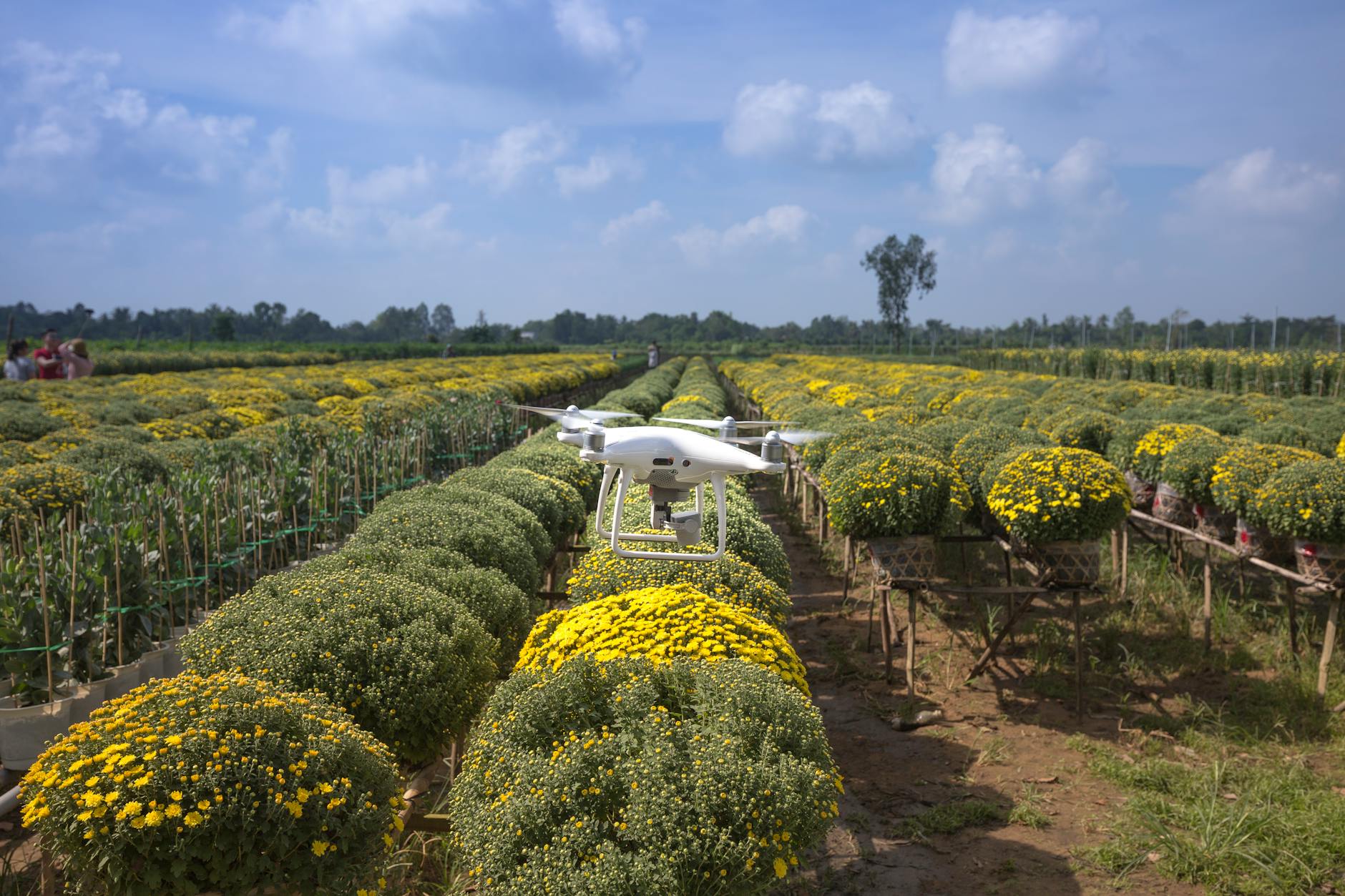
The use of drones in agriculture has been growing both in quantity and in diversity of applications. “The most common models are battery-powered and multi-rotor or fixed-wing,” Soares explains. “They are classified according to their weight and maximum flight height, and feature countless types of hardware, software, cameras, and sensors that allow them to perform several processes, such as georeferenced mapping, monitoring, imaging, and, in the case of agricultural drones, the automated application of liquid and solid products,” the scientist details.
The researcher reports that agricultural drones have unique characteristics in their spraying process, differentiating them from both ground-based sprayers and agricultural aircraft, and thus represent an intermediate technology between those systems. “Therefore, a careful analysis before adoption is essential to ensure that the technology adds benefits to agricultural activity,” Soares argues.
He explains that data and research are still lacking to determine, for instance, application rate, working speed and height, spraying range, droplet deposition and uniformity, drift, product mixing, and biological target control. “Some inherent advantages of drone spraying require no research proof, although measuring some of these advantages could provide valuable insights into the use of the technology,” he states.
The scientist also underscores that the area still requires further studies, as equipment rapidly evolves and modernize year after year. “It’s an incessant effort because, in addition to the machine updates, the diversity of crops, products, and targets involved is also constantly increasing,” Soares observes.
For the researcher, an example of a shift in technology is the trend towards adopting rotor heads in the main drone models currently used on the market, replacing traditional hydraulic nozzles. “The rotor head consists of a tip with a high-speed rotating disc that splits the liquid into drops and offers the option of controlling droplet size. This can increase the uniformity of the droplet spectrum compared to hydraulic nozzles, as it eliminates drops that are so small that cause drift,” he explains, stressing that most rotor heads can operate with droplets ranging from little to ultra-large.
Regulations on the use of agricultural drones
Unmanned aerial vehicle (UAV) or remotely piloted aircraft (RPA) are the most commonly used terms for the popular drones in official Brazilian regulations. According to Soares, farmers or companies providing aerial spraying services that have doubts about their compliance with legislation can consult several sources. One such source is the website of the National Union of Agricultural Aviation Companies (Sindag), which gathers the main legal requirements. “It’s important to be aware of all current legislation and meet the requirements so that there are no problems with regulatory agencies and to maintain the safety of aerial applications,” Soares says.
According to Soares, as drones are equipment that broadcast radio frequencies, they need to be approved by the National Telecommunications Agency (Anatel), a Brazilian Government agency responsible for regulating all telecommunications infrastructure in the country. Soares also says that the National Civil Aviation Agency (Anac), another federal agency,is responsible for regulating and overseeing civil aviation activities and aeronautical and airport infrastructure in the country. Meanwhile, the Department of Airspace Control (Decea) manages activities related to the control of Brazilian airspace, flight protection, search and rescue services, and telecommunications by the Air Force Command, and thus are the ones that authorize flights in restricted areas, for instance.
In addition to the regulations of the agencies described, the Brazilian Ministry of Agriculture and Livestock (Mapa) establishes specific rules for the operation of remotely piloted aircraft intended for the application of pesticides and similar products, adjuvants, fertilizers, inoculants, corrective products and seeds.
Tips and important information about agricultural drones
Advantages of agricultural drones:
• Removal of human operators from the area to be sprayed, reducing health hazards they could be exposed to
• Independence from traffic conditions on the ground
• No soil compaction or crop lodging caused by ground-based spraying machines
• Low water consumption
• Traceability (data records and application map)
Key factors to consider when using agricultural drones, whether to start a spraying business or to own one:
• Legislation: understanding national, state, and municipal regulations for drone operation, including specific obligations related to spraying agrochemicals
• Equipment: selection of drone type, onboard technology, cargo capacity, and other technical specifications that relate to spraying needs, according to the intended use
• Technical training: specific training on drone operations and on how to correctly apply agrochemicals
• Financial investment: detailed financial planning, considering the costs of acquiring equipment, management software, insurance, regular and emergency maintenance, labor, and other costs. Farmers should consider whether the drone will supplement or replace existing spraying technologies
• Market identification: analysis of potential market, including predominant characteristics of the areas to be served, crop demands, competition, and general technology trends
• Strategic partnerships: collaborations with companies or organizations in the agricultural sector, such as farmers, cooperative unions, farmers’ associations and drone manufacturers





 Agricultura e Negócios